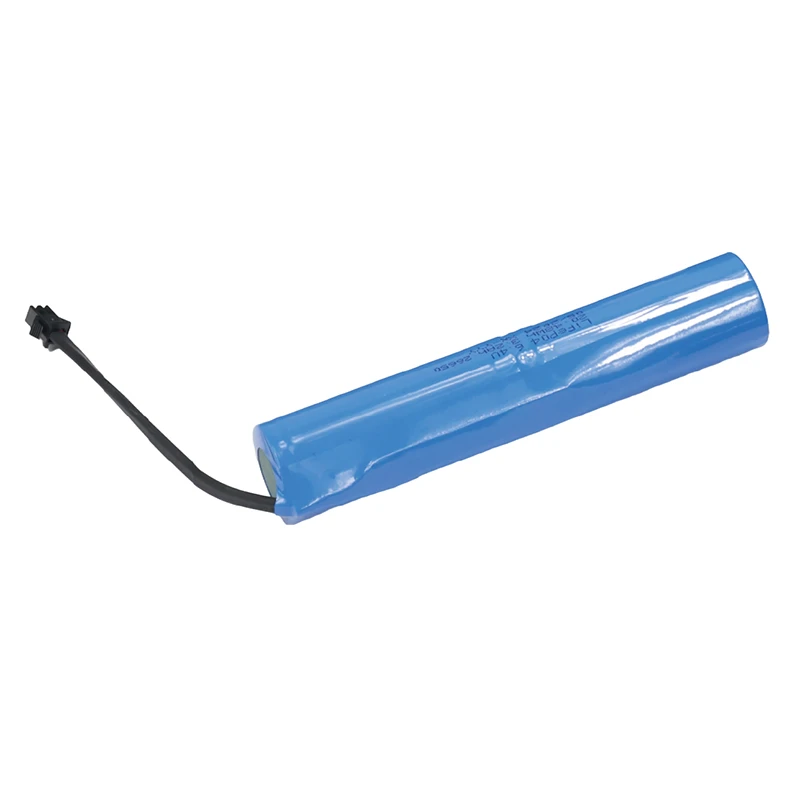
Performance testing for electric robot batteries is primarily designed to evaluate their capacity, power output capabilities, stability, and safety status, thereby ensuring their ability to operate reliably over extended periods under complex working conditions. Given the high demands robots place on continuous power supply, the testing protocols employed are typically more rigorous and systematic than those applied to standard consumer-grade batteries.
Capacity and energy testing constitute the most fundamental performance metrics. Through standardized charge-discharge cycles, the battery's actual usable capacity (Ah) and energy output (Wh) are measured and compared against their nominal values to identify any issues regarding capacity degradation or consistency.
Charge-discharge performance testing encompasses charging efficiency, discharge platform stability, and rate capability testing. Particularly under high-load conditions, it is essential to verify whether the battery exhibits issues-such as excessive voltage drop, abnormal heat generation, or output instability-during high-current discharge, thereby ensuring the continuity of power supply throughout the robot's operation.
Temperature and thermal management testing also represent a critical component of the process. Since batteries generate heat during charging and discharging, it is necessary to simulate temperature rise scenarios under various operating conditions to assess how their performance varies within high- or low-temperature environments. Concurrently, these tests validate the Battery Management System's (BMS) ability to respond effectively to thermal anomalies.
The testing regimen also includes cycle life testing, which involves subjecting the battery to repeated charge-discharge cycles to monitor the rate of capacity degradation and evaluate its overall service life. Typically, high-quality electric robot batteries are expected to maintain a high capacity retention rate even after undergoing hundreds or even thousands of charge-discharge cycles.
Safety performance testing-including tests for overcharging, over-discharging, short circuits, crushing, and vibration-is conducted to verify the battery's safety under extreme conditions. These tests ensure that the battery will not suffer catastrophic failure during actual robot operation, transportation, or in the event of unforeseen accidents.
Overall, the performance testing of electric robot batteries constitutes a comprehensive framework encompassing "Capacity-Power-Temperature-Lifespan-Safety." Its ultimate objective is to guarantee the battery's stability and reliability within the complex and demanding environments characteristic of long-term robotic applications.