

When it comes to rechargeable consumer batteries, one question that often pops up is, "Should I charge a rechargeable consumer battery after every use?" As a consumer battery supplier, I've encountered this query numerous times from customers, and it's time to shed some scientific light on this topic.
Understanding Rechargeable Batteries
Rechargeable batteries have become an integral part of our daily lives. From Smart Band Battery powering our fitness trackers to Handheld Scanner Battery enabling seamless data collection, these batteries are everywhere. The most common types of rechargeable consumer batteries are Nickel - Cadmium (Ni - Cd), Nickel - Metal Hydride (Ni - MH), and Lithium - Ion (Li - Ion) batteries.
Each type of battery has its own unique characteristics and charging requirements. Ni - Cd batteries, for example, are known for their durability and ability to withstand high - discharge rates. However, they suffer from the "memory effect," which can reduce their capacity over time if not properly charged. Ni - MH batteries offer a higher energy density than Ni - Cd batteries and are more environmentally friendly. They have a lower self - discharge rate but also need to be charged carefully to maintain their performance. Li - Ion batteries, on the other hand, are the most popular choice for modern consumer electronics due to their high energy density, low self - discharge rate, and lack of the memory effect.
The Case for Charging After Every Use
One school of thought argues that charging a rechargeable battery after every use is a good practice. This approach ensures that the battery is always at its maximum capacity when you need it. For devices that are used frequently or in critical situations, such as Bluetooth Device Battery in wireless earphones or Beauty Device Battery in skincare gadgets, having a fully - charged battery is essential.
Charging after every use can also help prevent deep discharges. Deep discharges occur when a battery is drained to a very low level, which can be harmful to some types of batteries, especially Ni - Cd and Ni - MH. When these batteries are deep - discharged, they can develop voltage depression, which reduces their overall capacity and performance. By charging after each use, you can keep the battery within a safe state of charge and avoid these issues.
The Case Against Charging After Every Use
On the other hand, there are valid reasons why you might not want to charge a rechargeable battery after every use. One of the primary concerns is the battery's lifespan. Rechargeable batteries have a limited number of charge - discharge cycles. Each time you charge and discharge a battery, it undergoes chemical reactions that gradually degrade its performance over time.
For Li - Ion batteries, charging them after every use can actually be detrimental. Li - Ion batteries have the longest lifespan when they are kept at a partial state of charge. Frequent full charges can cause the battery to heat up, which accelerates the degradation of the battery's internal components. It is recommended to keep Li - Ion batteries between 20% and 80% state of charge for optimal longevity.
Another factor to consider is convenience. If you have multiple devices with rechargeable batteries, constantly charging each battery after every use can be time - consuming and impractical. For example, if you have a POS Terminal Battery, you might use it for several transactions throughout the day. Continuously charging it after each use would disrupt your business operations.
So, What Should You Do?
The answer depends on the type of battery and the device it powers. For Ni - Cd and Ni - MH batteries, it is generally advisable to charge them after every use or at least avoid deep discharges. However, you should also follow the manufacturer's guidelines, as some modern Ni - MH batteries are designed to be more forgiving.
For Li - Ion batteries, it is best to avoid frequent full charges. Instead, try to keep the battery within the 20% - 80% state of charge range. If you need to store the battery for an extended period, it should be charged to around 50%.
In addition to the battery type, the frequency of use and the importance of having a fully - charged battery also play a role. If you rely heavily on a device and need it to be ready at all times, such as a smartwatch with a Smart Band Battery for tracking your health during workouts, then charging after every use might be necessary. But if it's a device that you use less frequently, like a handheld scanner with a Handheld Scanner Battery, you can afford to be more flexible with your charging schedule.

How Our Batteries Are Designed to Meet Your Needs
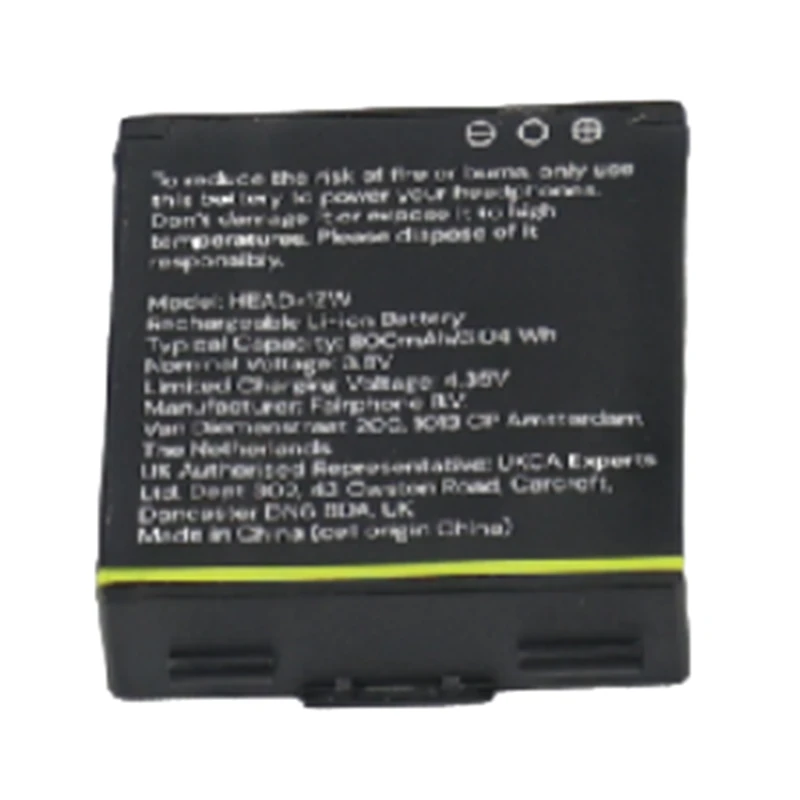
As a consumer battery supplier, we understand the importance of these charging considerations. That's why we design our batteries to offer the best of both worlds. Our Li - Ion batteries are engineered to have a long lifespan even with normal use. We use advanced battery management systems that help regulate the charging process, preventing overcharging and over - discharging.
Whether you need a Bluetooth Device Battery for seamless wireless connectivity, a Beauty Device Battery for your daily skincare routine, or a POS Terminal Battery for your business transactions, our batteries are built to perform reliably.
Contact Us for Your Battery Needs
If you're in the market for high - quality rechargeable consumer batteries, we're here to help. Our team of experts can provide you with detailed information about our products, including their charging requirements and performance characteristics. We offer a wide range of batteries to suit different devices and applications. Whether you're a small business owner looking for a reliable POS Terminal Battery or an individual who needs a Smart Band Battery for your fitness tracker, we have the right solution for you.
We're always open to discussing your specific needs and can even offer customized battery solutions if required. Don't hesitate to reach out to us for a free consultation. Let us help you find the perfect rechargeable battery for your devices and ensure that they operate at their best.
References
- Linden, D., & Reddy, T. B. (2002). Handbook of Batteries. McGraw - Hill.
- Duffy, I. (2014). Battery Technology Handbook. Newnes.